
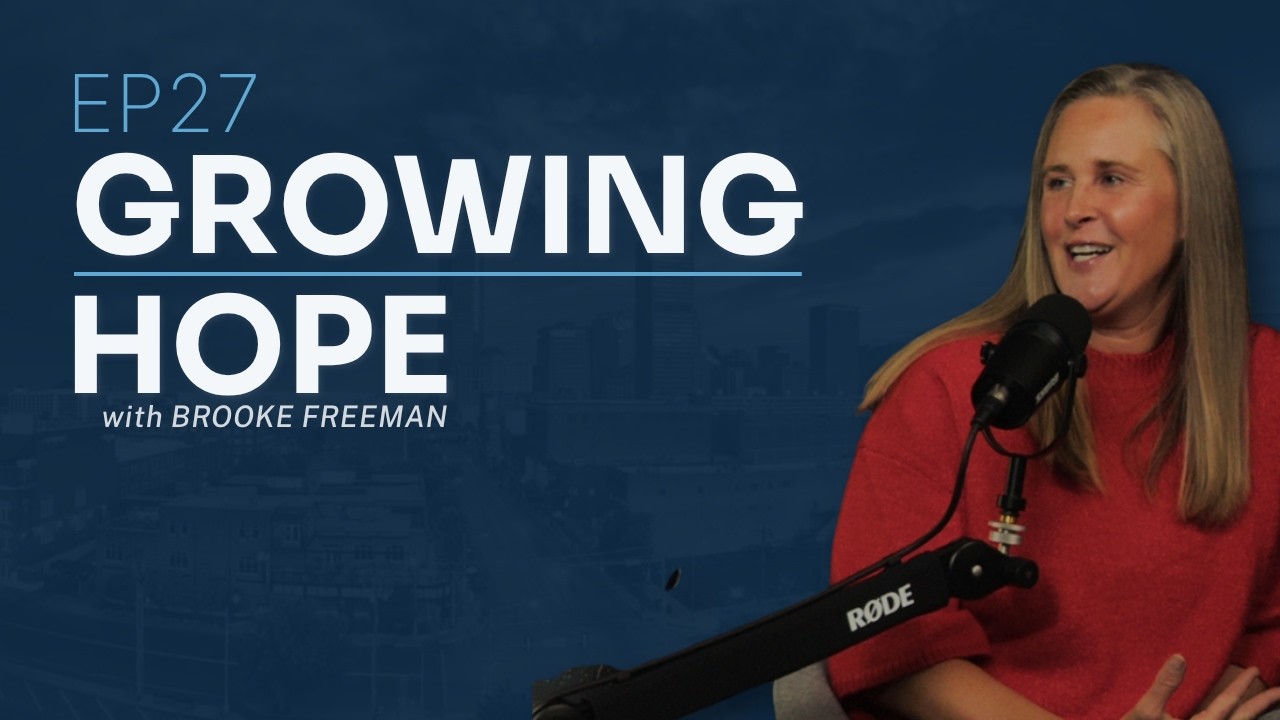



Brooke Freeman never planned to become a farmer.
After years working as a NICU nurse, she found herself wrestling with a simple question: How do we truly help people become healthier?
That question eventually led to the creation of Natural Freedom Farm, a nonprofit farm dedicated to growing fresh, nutrient-dense produce for families who might not otherwise have access to it.
In this conversation, Brooke shares the story behind the farm, the vision that launched it, and why education is just as important as the food itself.
She also explains regenerative farming, food insecurity, and how healthy food can become a pathway to better health outcomes for children and families.
Natural Freedom Farm has become an important partner to City Center, helping provide fresh produce that goes directly into meals served to youth and families throughout Oklahoma City.
Guest InformationBrooke Freeman
Founder, Natural Freedom Farm
Website:
Natural Freedom Farm
Transcript
This transcript was generated from the published episode audio and lightly formatted for readability. It may contain errors in names or phrasing.
Read the full transcript
0:00 Freeman Farms with Brooke Freeman. And I'm just so excited to hear about this because they provide so many pounds of produce to City Center every year. It's unbelievable. And it's straight from the ground to our kitchen. So our kids get the absolute best. So without further ado, welcome Brooke Freeman. Thank you. You're welcome. Thank you so much for doing this. Yeah. I am just overjoyed at the partnership that we have with you guys. It's been such a just a tremendous joy to be able to take our kids out there, you know, and see what it looks like to do what you do, but also, you know, to experience
0:59 pulling a vegetable out of the ground and eating it right there. That's kind of a big deal for them. Yeah. So tell me a little bit about yourself, Brooke. I mean, we've gotten to know each other, but I don't know all about you. I want to hear more about, you know, how you grew up and where you grew up and all that good stuff. So tell me about Brooke. Um, I'm actually from Ohio. Okay. Um, but just life, life has brought me here to Oklahoma. I've been here for 12 years, I believe.
1:28 Um, and I've been married for 11 years. I have two boys, Jack and Lucas. Um, Jack is going to be a sophomore next year. You grew up so fast. It's unbelievable how fast it goes. And then Lucas is 10. And so, yeah, just a mom and mom and now a farmer and trying to build this nonprofit and trying to do all the hats. So it is a nonprofit organization then, right? Yes. That's right. Okay. So what, what started all that? What got you interested in doing what you're doing right now?
2:05 Um, so, um, originally I have a nursing background. Um, I did NICU nursing and, um, I basically was working nights and weekends in a hospital and I wanted to get out of doing that. Um, wanted to, I felt like I was missing activities with my kids and I was always tired and all of that. So, um, I had a family member who was friends with someone that had a pain management office. And so they're like, Oh, there's this job opportunities where you can get out of the hospital. So I started, um, to work for this pain management doctor. And during that time,
2:46 I just started getting stirred of there's gotta be something better than this. I felt like there was more natural. Maybe. Yes. I, I felt like, um, that wasn't my purpose anymore. I felt like I wanted to help people like truly help people. Um, and one day I just had this vision where I am like standing on a cliff and there are sheep everywhere. Okay. And I don't see Jesus, but in this vision, like I know that he's standing right next to me and I hear him say, I want you to feed my people.
3:24 And I remember in the vision, I'm like, what's that? What, what do you mean? Like, how am I supposed to feed your people? And then it was over and that was the end of it. And I kept trying to like, was it one of those just that it felt so real? Yes. Yeah. And I just kept trying to like reimagine that to see if I could get any more information. And that was literally the end of it. Um, and so I just kind of held on to that vision. And, um, again, again, my heart was being stirred to
3:59 get out of nursing and to do something that felt like I was truly making a big impact on people's health. And so I became a health coach. And through that, when I started talking to women, every single woman was saying to me, I can't afford organic, I can't afford healthy. I want to feed my kids healthy food. I don't have access. We're on a budget. It was the same thing over and over again. So I went to my husband and I said, I think we need to start a farm and it needs to be a nonprofit.
4:32 And the, these families that need the food, we can give it to them. And, and you know, my husband was like, okay, like we just like blindly we're like, okay. Yeah. Um, have zero farming experience. No, I have, I had no idea what I was doing. No nonprofit experience, no business experience. And I just had this, like looking back at it now, I just think that was not me. That was the Holy spirit because I literally had, there was no wavering. I was like, we are doing this. This was the vision. Like, this is what God wants me to do. Like we just blindly and stupidly
5:19 a word stupidly just went with it. Um, so we, we started it five years ago. Uh, we got our 501 C3 in January of 2020. Okay. But we didn't actually start farming until 21. That might be perfect timing. Yeah. You know, because you're, we're in COVID and you know, what else can you do but farm outside? That's great. Yeah. That's a great option. Yeah. That's really neat how that landed. Very cool. So you farm now and where's the farm located? It's in Chandler. Chandler. Yeah. Chandler, Oklahoma. Awesome. And some of our students have come out there to help, you know, farm the land
5:59 and kind of see what your day looks like. What, what has that been like for the kids when, I mean, what do you see when they come out here? Yeah. It's awesome. Um, it, it can be stressful getting all these teenagers and kids. We have schools that come out like Cassidy comes out every year and they bring 72 kids. So it is, it can get really crazy, really stressful out there, but it's always, it just always reminds me that this really is God's work because they will come out and they just pick
6:32 from the ground. And these kids are eating raw onions, raw garlic, beets. Like they will just put anything in their mouth because they are seeing it and experience it. Yeah. And like when I, I'm pretty sure it was city center that came out once and one of the kids, we were by the carrot bed, we were going to pull carrots. And one of the kids said, I had no idea. This is how a carrot is grown. And it's just a reminder that when we eat, we, we don't think about like where that came from or how that grows. We
7:08 just eat, you know, what, when you think about it too, you're putting this in your body. We know that, but it's becoming a part of your biology. You know, when you think about that, I'm praying over every meal, number one. And number two, you know, why wouldn't I want to figure out a way to get the most nutritious food I could possibly get into my body, you know? And I think that's why a lot of our, and we hear this all the time these days, you know, there's a lot of people that are sluggish
7:33 and tired and not feeling well and overweight and all these different things. And I believe it all goes back to food. Oh yeah, absolutely. And so I love that you're doing that. And I love that you're doing it in a way that saying, Hey, this should be accessible. You know, this should not be an accessible food is a human, right? We should all have access to food and how, you know, honestly, how cool would it be if we had some of our families start to farm in their backyard because of what they've experienced
7:58 here and have a like continuous source of sustainable food for themselves. But so I love that you're teaching that. I love that our kids are being exposed to that because you're right. Um, in this area that there's just not a lot of farming happening, you know, but it's such a powerful, uh, ministry. I believe that is very important because, you know, feeding people food can get you into, you know, spaces in the heart really quickly, you know, and ultimately our goal is just to have human experiences with people and help people feel normal, you know, and just feel like, Hey,
8:33 I'm a human, just like you, my struggles look different, but we all need the same things. And so how can we make acts, give access to those things? So love what you're doing. And so what do you think is next? Do you want to duplicate the farm somewhere else as well? Or do you want to stick to the farm that you have, which is, I'm sure your work's cut out for you. Yes. Right now, our goal is just to keep growing. Um, last year we donated a thousand pounds. So it, it, yeah, but we want to,
9:02 I mean, it's still, I feel like just the tip of the iceberg and, uh, we, we just want to keep growing and, and provide more food to our partnerships that we have. Um, and so I just see the farm just getting more and more growth. Um, where we have 16 acres and we probably are growing on two acres. And so we have a, the farm has a lot of potential. Um, and I just, I, I, you know, obviously I, I'm just going with the flow. Um, whatever God brings our way. Um, I like when we
9:45 first started the farm, I think it was hard for us to get supporters and donors. Cause everyone went like, what's your five-year plan? What's your, what's your distribution plan? You know, what's all this. And I honestly, I was just blindly following God and so food and give it away. That's my plan. I was like, I don't have a five-year plan. My plan is whatever door God opens, like that's what will come. And that's kind of what we just stuck to of, of whatever will come. Um, and so I have my plans, you know, I, we're, we're trying to build a commercial kitchen on the
10:22 farm. We want to be able to have cooking classes and actually make food for people and make meals for people and all those things. And so I have a lot of plans, but I'm just kind of, I've, I have learned over the past five years, this is not my timing at all. Yeah. Don't make a plan because it's going to change for sure. And so we are just going with the flow, but, um, every year we grow every year we expand. And so God's just slowly, you know, moving us down the
10:56 path where he wants us. I love that. That's really cool. Well, and you know, just the fact that, you know, um, there's so much need for that right now. And you know, when there's food insecurity, people typically will go to the dollar menu or something like that, you know? And so here, I don't even think the students and even parents really understand, you know, the, the level of food that, that they're getting the level of nutrients they're getting in their body. And it's just so cool, especially when they start to enjoy it, you know, and they embrace it.
11:26 Cause I think that's really it. If we could get our kids to enjoy and embrace the right food from the start, they probably wouldn't even want the other stuff, you know? Yeah. And so I love that the education side is happening. There's, I was listening to a podcast the other day and there was a guy talking about a friend of his in Texas that had a similar to you had a ranch or a farm or something like that, but, um, his restaurant or kitchen that he had on the ranch, they would only
11:53 cook, um, stuff that is from Texas. You know what I mean? So I can see some, a lot of cool themes coming out of that. That would be so neat to, to have on your property. So I know we would come out there and do some classes. So, Hey, sign up for Brooks classes today. What's your website right now that we can point people to? Um, natural freedom farm.org. Um, and my emails natural freedom farm at Gmail. Okay. Um, we're on social media, so anyone can reach out. Um, and going back
12:27 to the education, education is huge for our organization. We didn't want to just hand over food. Um, we want kids to have the hands-on experience. We want them to walk around the gardens and us to teach them. This is what the health benefits will you'll get from eating a beet. This is the health benefits of eating an onion. Um, and so they learn. And then as they're consuming it, they're like, so for beats, yes. So beats is great for cleansing the blood. It's good for blood pressure. It's good for the heart. Um, and so while they're eating that, they're like,
13:09 Oh, okay, this is good for my heart. Or I've had groups out and they're like, Oh, let's give this to so-and-so, you know, she has diabetes or whatever. Yeah. And so it's, it's nice that they have that connection. Um, helping them connect those dots. Yes. That's really cool. And, and getting them to understand where their food comes from and how God intended it to be. Yeah. Um, we really do have a broken food system. Man, it's unreal, you know? Yeah. The fact that cereal was on our food pyramid for so long, you know, it just makes you wonder why, you know, I think I do know
13:44 why, but at the same time, you're like, man, at the expense of, you know, people, you know, that's unfortunate, but the good news is we have choices, you know, and thank, and thanks to people like you, um, a lot of people have better choices. So, so what does that look like? Say I'm a, someone that just wants to come out to the farm. What does that look like? Can they show up? Can they just arrive? Should they call ahead? What does that look like? Yes. I said, I suggest that anyone reach out
14:13 to me first because we don't live there. Um, we live 40 minutes away. And so I don't want anyone to show up and let's not be there. So, um, reach out on social media or email or anything to contact me and anyone can come out and visit. We've had just a one family come out and then we have our 72 kids come out. So, um, we have a wide range of people and, um, I would love to get to the point where we have, you know, open operation hours. Um, it's been hard cause I've kind of been a one man show
14:51 for five years, um, doing all the things. And so sometimes I'm out there just when my schedule allows it. And, but it would be nice to one day, you know, say nine to two every day. We are open. Yeah. We have a shop and come and purchase food and come get a tour and all the things. So that's great. I love that for sure. Well, I really want people to go to the website and check it out because, um, what you're doing is incredible. It's important. It's relevant. It's necessary. You're not, and you're not just handing out food, you know, you're actually educating people
15:25 as they consume this food. So it's just such a perfect program as it relates to nutrition for us specifically at city center. That's a really big deal to us because we do see a lot of young people and families going without, you know, and sometimes, you know, 10 bags of chips will get you the calories that, you know, really healthy carrot or something would have, it would have nourished your body totally different. And, you know, and so it's, if we can, things can be hard enough in communities like this. So if you're already, if you're on top of that experience and
15:59 diabetes or all these other things that some of this food can cause, um, man, it's really hard to get yourself out of the situation that's, that can be challenging. So, you know, it starts with how we take care of ourself, you know, how we take care of our mind, our bodies and food definitely translates to a healthier mind as well, you know? So I really believe that there's a lot of us just walking around with this fog. Um, and we're wondering why and it's food. Yeah. And people don't know, they don't know, um, how to, they don't see another way. They see, I have a budget. This is what I have
16:33 in front of me. A lot of communities, like their grocery store is a dollar general. And so like they, the access isn't there. And that's really where we wanted to come in and partner with other nonprofits like you and say, Hey, your community doesn't have access to healthy foods, to fresh foods, to local foods. So we're going to come in and we're going to bring the food to you. And so that's, that's really where we want to help these communities and help these families. Um, cause a lot of people can't get out to Chandler either. You know, that's been another
17:09 problem that we face is, um, organizations or families want to come get fresh vegetables, but they can't get out to Chandler. So having these partnerships in the inner cities is essential. Yeah. See, that was my distribution plan. I had it. Yeah. Yeah. She was right here. That's my world. My, my plan stays in my head. My wife would prefer it on paper more, but, but, well, that's awesome. Brooke, thank you so much for coming and, um, praying over your marriage that it's just continues to, uh, you know, sustaining something like this
17:44 can be challenging, you know? So we realize, you know, it's not just you doing it. Most likely your husband's a part of that process as well. And, but it's so fulfilling, I'm sure, because it has been for us, you know, and, um, I just really love everything that's happening out there. And I don't know, would you guys be willing to come here and do a cooking class with our students? Okay. I think we should do that. We do cooking classes right now, but I want to do it from this angle for them to cook
18:10 the food that, you know, you brought out and even explain what happens to other food. Maybe that doesn't happen to yours before it gets to their table. Yeah. You know, I mean, that could be pretty eyeopening just to see all the chemicals and things that go on. Yeah. That's a whole nother topic about, you know, how, how we farm and, and why we farm the way that we farm to give the most nutrients into the food that we grow. Okay. Well, tell us about that a little bit. I want to hear
18:37 about that. Yeah. We can keep going as long as we want. So we do regenerative farming. Okay. And there's the originals. Yes. That's old school farming. Seventh year. Yeah. Six years, take off a year. Okay. Gotcha. Yeah. So we do. And so there's like pillars of regenerative farming, but it's basically your focus is the soil because the soil is what feeds your plants, the nutrients. So if you have depleted the soil of good bacteria, it's like our gut, like God literally made our bodies and, and the garden, the same. And so, um, if we are spraying chemicals and not taking care of our soil
19:23 and all of that good bacteria, good fungi, all those microbes die, then your plant is not getting any nutrients. So we do practices, um, that will give the soil the most nutrients. Okay. So that then your plant has the most nutrients because our thought is if this is the only vegetable that these kids are going to eat this week, I want it to be loaded. Superfood. Yeah. Yes. I want it to be loaded. I don't want it to be depleted because most of the food that we do get in the grocery store is depleted
19:58 because as soon as you take it out of the ground, it starts pulling, you know, it starts dying and all those nutrients start coming out. So that's why eating local and eating fresh is like the biggest trend right now. And so it is very important because, you know, sometimes at the grocery store, our food is weeks to months old and you're, it still looks decent. It does look decent. Why is that? Because they spray it with things to prevent it from rotting and going bad. So, um, so yes, we do regenerative farming. We want, um, we want the healthiest food because I, my goal is to
20:42 improve the health of children in this community, in this state. And so in order to do that, I have to have the best produce. And so that is what we aim to do. And, um, yeah, that's why we're mission partners with you guys, because that's how we think too. You know, we think, you know, how we treat people, how, what we offer people, how we serve them, how they feel after they leave our space is probably more important and indicate some level of dignity that we offer, you know, above just the programs we offer and all that kind of stuff. We want to make sure people feel seen and
21:19 valued that. So we want the best for them. You know, I remember when we first started doing food, that was one of the initial programs we set out to do because we did know food insecurity was really bad in this area. And, um, we had a program at first that we were working with, I think it was a government program, but the meals they were bringing just, you know, I was like, man, it's food, it's calories, but I wonder how they feel when they eat that, you know? And so we said, we're
21:46 going to raise the money ourselves and we're going to have home cooked meals every day. Um, not always, not always from scratch, but man, for the most part, we, we try to do that. You know, we want it to smell like a home in here because this is one of the only places that might feel like home to a lot of our, our friends that come in here. So I love that heart behind that. That's really important. That is really, and people, I think people feel that. Yeah. And that's a, you know, food banks are
22:13 great. Um, and they definitely serve a purpose. We want, we don't want people hungry. Um, but our organization is solely focused on health. And so we don't want, you know, obviously if someone is starving, we want them to have cans or things that won't go bad and, and things like that. But, um, I want to not only feed, but improve health. And so that's where we are really focused and dedicated. And so I love being partnered up with you all and knowing that I'm dropping food off and your cook is going to prepare a meal for your families and for the kids that come here. Um, I just love that
22:59 what we bring is getting used and it's getting used quickly. And like most of the time I harvest that day and bring it to you all. So you all have the freshest food possible. We are spoiled. Yeah. And, um, I'm a little nervous about getting this out there. I don't want your, uh, your food pantry is going to be packed because anything that isn't cooked will go into the refrigerator at the food pantry. Mm-hmm. And, um, people can come get fresh vegetables through that way too. So, I mean, who, who can get fresh, who gives away fresh vegetables like this? You know, it's pretty cool.
23:37 And it really just gets me excited for people. So thank you so much, Brooke, for all you do. And again, website again, really quick for us. I want to make sure people hear that, but it's natural freedom farm.org is the, is the website and they can give there, they can contribute there and everything else. Yes. They can give, they can get a good idea of what we do. Um, social media too. Everyone's on social media. So, um, you can always reach out to me through there. Um, and just kind of
24:08 see what we do, see our beautiful produce and. I love it. Yes. Let's do it. So guys, please go to that website. Please contribute because this money is going straight to feeding families that need food, number one, but need nutritious food because the majority of their life I'm sure that has been, uh, spent eating non-nutritious food. So please give to Freeman farms. It's, it's an incredible program. I can't wait to see the kitchen and, um, Brooke, I'm just excited that you did this with us. We, I really am excited just to get the word out about what you guys are doing. It's so special.
24:44 So, um, again, thank you so much for coming. Thank you. You got to come back. I want to hear more whenever this thing grows and you have your kitchen. Yes. And we'll come to a cooking class and we're excited to have the kids out in a couple of weeks. We're going to, they're going to cook at the farm. I love it. So we are excited to have them out. Awesome. Well, thank you guys again for joining us as well. Have a great week. Come back and join us next week.